Start with your tiles.
Players begin with 13 tiles; the dealer starts with an extra tile and discards first. Sort your hand into suits and look for potential groups.
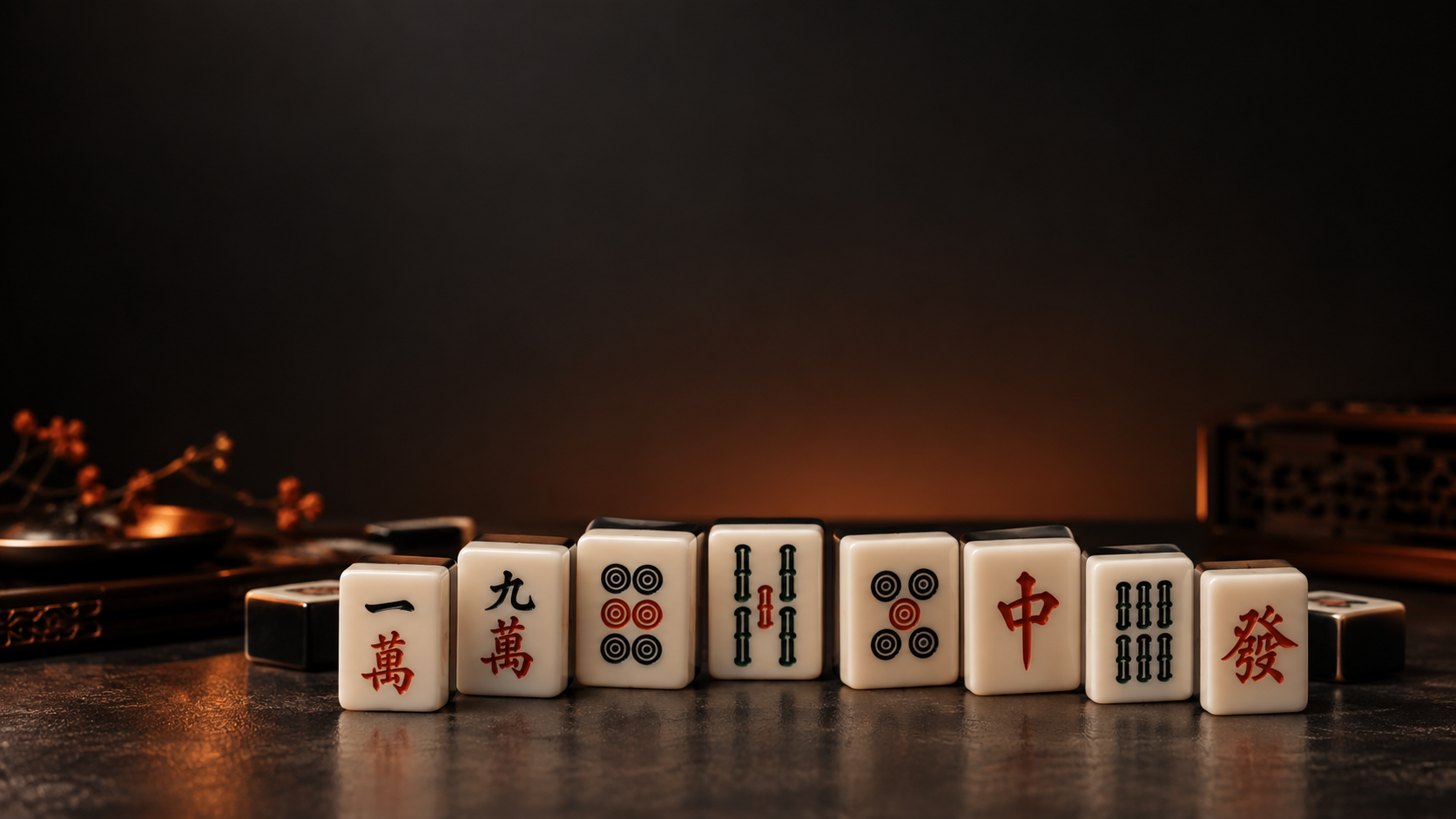
Three numbered suits. Winds and dragons. Flowers, seasons, and American jokers.
Every face, in one continuous row. Click any tile to explore it.
Learn three building blocks of Chinese mahjong. Pick tiles, build a group, and see why it works.
Practice groups, not a full winning hand. American mahjong follows its hand card; chow-style groups are not used in the same way.
Mahjong brings four people together around a table of tiles. You draw, discard, and build a hand—reading patterns and finding possibilities along the way.
Our club is a place to learn it together. Start with the basics, ask every question, and discover why one more round is always so tempting.
Chinese and American mahjong share a rhythm. What makes a winning hand is where their paths diverge.
There is no single Chinese ruleset. This is an introduction to the common four-sets-and-a-pair structure; regional rules determine valid wins and scoring.
A set is a sequence of three consecutive tiles in one suit, or three identical tiles. A pair is two identical tiles. Kongs and special hands introduce exceptions.
Players begin with 13 tiles; the dealer starts with an extra tile and discards first. Sort your hand into suits and look for potential groups.
On a normal turn, draw a tile from the wall, then discard one. Keep tiles that work together. Certain discards can also be claimed to complete a set.
When your hand meets your table’s winning rules, declare mahjong. Four sets and a pair is a common structure, but may not satisfy a variant’s minimum scoring requirement.
Four sets and a pair: an illustration of the common Chinese structure, not a guaranteed valid win under every ruleset.
Before the first round, agree on a specific variant. Hong Kong, Sichuan, and Chinese Official rules differ in important ways. Flower and season tiles are optional in some sets and are often handled as bonus tiles.
Common American play follows an annually updated hand card, such as the National Mah Jongg League card. That card defines which combinations can win.
Match one of your current card’s listed hands, including its suit, number, grouping, and exposure requirements. This is not generally a four-sets-and-a-pair game.
Start with 13 tiles; East begins with 14. Choose a few possible hands on your card. Its colors indicate suit relationships, not tile colors.
The Charleston usually begins with passing three tiles right, across, then left. Further exchanges follow the chosen rules. Once play starts, draw and discard to build toward a listed hand.
Declare mahjong when all 14 tiles satisfy a listed hand. Check restrictions on exposed groups and concealed hands, and use jokers only where the rules allow.
This overview describes common NMJL-style play. Other American organizations may use different cards or rules. The standard 152-tile playing set includes eight flowers and eight jokers; sets may include extra spare tiles.
| At the table | Chinese traditions | American / NMJL-style |
|---|---|---|
| Winning goal | Usually sets and a pair, plus variant-specific requirements. | A precise hand on the annual card. |
| Sequences | Three consecutive tiles in one suit can form a chow. | No chow-style calls; follow the card’s groupings. |
| Jokers | Not used in many common variants. | Eight, with restrictions on where they can substitute. |
| Before play | Set up and deal according to the variant. | Usually includes the Charleston tile exchange. |
Spot patterns, weigh possibilities, and practice making decisions with incomplete information. Every new tile changes the question.
Put down your phone and settle into a shared rhythm. Familiar faces become teammates in learning—even across the table.
Discover a game with roots in China and communities around the world. Learn how different traditions make the same tiles their own.
New to mahjong? Start here. Already play? Come join a game.
Weekly club meeting · Current planThursdays · Second lunch
Find usSouthworth Library
Who can join?Thayer students · All experience levels
Sign up for club ↗A future after-school learning series for parents and students. We’ll help beginners get started, and anyone who already plays—or simply wants to play—is welcome to join a table. More details soon.
Schedule and location will be shared once they are confirmed.
Details will be shared once the series is confirmed.
More information coming soon.
First-time learners and experienced players
To be announced with the schedule.